Ecosystem — Class 12 CBSE Biology revision notes
A 4-page visual revision sheet for Ecosystem, written for Class 12 CBSE Biology. Formulas, diagrams and the traps that cost marks, laid out to be read the night before rather than the term before. Free, and it opens inside CapCompass.
 Page 1 as PDF
Ecosystem in one look
energy flows one way through it, matter cycles back
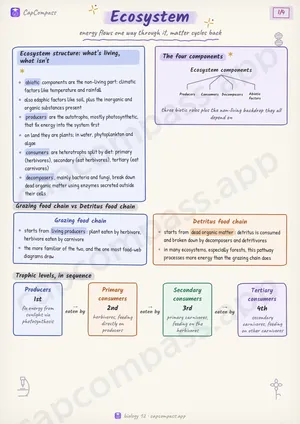
Ecosystem structure: what's living, what isn't
- abiotic components are the non-living part: climatic factors like temperature and rainfall
- also edaphic factors like soil, plus the inorganic and organic substances present
- producers are the autotrophs, mostly photosynthetic, that fix energy into the system first
- on land they are plants; in water, phytoplankton and algae
- consumers are heterotrophs split by diet: primary (herbivores), secondary (eat herbivores), tertiary (eat carnivores)
- decomposers, mainly bacteria and fungi, break down dead organic matter using enzymes secreted outside their cells
Grazing food chain vs Detritus food chain
Grazing food chain
- starts from living producers: plant eaten by herbivore, herbivore eaten by carnivore
- the more familiar of the two, and the one most food-web diagrams draw
Detritus food chain
- starts from dead organic matter: detritus is consumed and broken down by decomposers and detritivores
- in many ecosystems, especially forests, this pathway processes more energy than the grazing chain does
Trophic levels, in sequence
- Producers: fix energy from sunlight via photosynthesis
- Primary consumers: herbivores, feeding directly on producers
- Secondary consumers: primary carnivores, feeding on the herbivores
- Tertiary consumers: secondary carnivores, feeding on other carnivores
Page 1 of 4. The full sheet, all 4 pages, opens free in the app.
What this Ecosystem sheet covers
- Ecosystem structure: what's living, what isn't
- The four components
- Grazing food chain vs Detritus food chain
- Grazing food chain
- Detritus food chain
- Trophic levels, in sequence
- Producers
- Primary consumers
- Secondary consumers
- Tertiary consumers
- The 10 percent law
- Energy reaching the third trophic level
- Productivity: GPP, NPP, and what's left over
- Ecological succession: how a community changes over time
- Kinds of succession, sorted two ways
- Primary
- Secondary
- Hydrarch
- Xerarch
- Decomposition: how detritus becomes nutrients again
- Detritus, broken down
- What speeds up or slows down decomposition
- Nutrient cycles: two kinds of reservoir
- Ecological pyramids: usual shape and the exception
- Pyramid shapes, and what gets counted
- Traps that cost marks
- Tricks that save time
How CapCompass uses this sheet
These notes are not a standalone PDF. CapCompass plans Biology chapter by chapter against your real exam dates and free hours, and when the plan reaches Ecosystem the sheet opens inside the study block itself — at the page covering the sub-topic that block is on, with the timer still running. Revision arrives at the moment the plan says revise, instead of having to be gone looking for.
More Biology Class 12 revision notes
- Biodiversity and Conservation
- Biotechnology and its Applications
- Biotechnology: Principles and Processes
- Evolution
- Human Health and Disease
- Human Reproduction
- Microbes in Human Welfare
- Molecular Basis of Inheritance
- Organisms and Populations
- Principles of Inheritance and Variation
- Reproductive Health
- Sexual Reproduction in Flowering Plants